

MedFriendly®














Cancer
Cancer has the following meanings in the field of
medicine:
1. An abnormal growth of new tissue characterized by
uncontrolled growth of abnormally structured cells that
have a more primitive form. A cell is the smallest, most
basic unit of life, that is capable of existing by itself.
Primitive means that the cells appear in a form that is not
fully developed. Cancer cells tend to invade surrounding
tissue and spread to distant body parts.
2. Any of a large group of malignant diseases
characterized by an abnormal, uncontrolled growth of
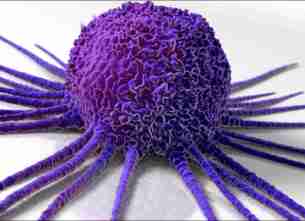
A migrating cancer cell
under the microscope.
new cells in one of the body organs or tissues. When describing cancer cells, malignant
means that the newly formed tissues are made of abnormally structured and primitive-
looking cells that grow uncontrollably, spread throughout the body, and invade
surrounding tissues. This process can cause passageways in the body to be blocked,
bones to be eroded, and nerves to be destroyed.
WHAT IS THE DIFFERENCE BETWEEN MALIGNANT AND BENIGN CANCER?
Unlike malignant forms of cancer, benign tumors
stay in a localized area of the body. Malignant
cancers may spread uncontrollably and invade
surrounding tissues, whereas benign tumors will
not. In a process known as metastiasis, malignant
cancer cells can spread through the blood or
lymphatic system to other body parts, forming
independently growing cancer cells. The lymphatic
system is a system of vessels that drain lymph
from all over the body back into the blood. Lymph is
a milky fluid that contains proteins, fats, and white
blood cells (which help the body fight off diseases).
ARE THERE DIFFERENT TYPES OF CANCER?
Yes, there are many different types of cancer. Cancers differ based on where it is
located in the body, how fast it tends to spread, and how far it has actually spread.
IN GENERAL, WHAT CAUSES CANCER?
It is estimated that approximately 20% of cancers have an unknown cause. Although it is sometimes
impossible to figure out what caused cancer in a specific case, it is generally thought that many forms of
cancer are due to changes in DNA (an abbreviation for deoxyribonucleic acid). DNA is a chain of many
connected genes. Genes are tiny structures that contain coded instructions for how proteins should be
constructed and how certain bodily characteristics should develop. For example, genes control the
natural color of people's eyes and hair, and whether they will be male or female. Genes are passed on
from parents to their children. If something goes wrong with the DNA functioning, it may send out
instructions to cause certain cells to become cancerous.
Children can inherit faulty genes and faulty DNA from their parents. Thus, in some cases, cancer can be
inherited. Some people will develop cancer simply based on the genes that have been passed on to
them from their parents. Other people may have an increased risk to develop cancer based on the
genes that have been passed on to them but will not develop cancer unless something happens to them
in their environment to trigger it (for example, experiencing a high level of stress or smoking). Each
person has a different chance of developing cancer based on the genes passed on to him/her. Some
people have a 100% chance of developing cancer at some point, others have a 50% chance, and
others have a 5% chance.
All cells contain genes known as oncogenes. Oncogenes are genes that control the growth and
multiplication of cells. Cancer growth will actually begin when oncogenes in a cell are changed in some
way by cancer causing substances. Cancer causing substances are commonly referred to as
carcinogens. An example of a carcinogen is cigarette smoke.
When a cell is changed into a cancer-forming type of cell, changes occur to the oncogene, as is
described above. These changes to the oncogene are passed on to all of the cells that are produced
from that cell. This leads to a small group of abnormal cells to be produced. These abnormal cells begin
to divide more quickly than the normal cells around it.
The abnormal cells are also said to show a lack of differentiation. This means that the abnormal cells no
longer perform the special jobs that they were originally intended to. These cells may also no longer be
under control of nerves and hormones, like they usually are. Hormones are natural chemicals produced
by the body and released into the blood that have a specific effect on tissues in the body. Cancer cells
do not benefit the organism in any way but they use up nutrients in the body.
Whether or not one eventually develops cancer is usually based on an interaction of one's genes and
factors in the environment, some of which are described below. Some people may only need one factor
(for example, smoking) in the environment to trigger cancer, others may need two triggers (for example,
smoking and excessive stress), and others may need three or more triggers (for example, smoking,
excessive stress, and excessive alcohol use).
WHAT ARE SOME SPECIFIC THINGS THAT CAUSE CANCER?
Smoking, excessive alcohol use, and having a poor diet are factors that have been associated with
cancer. Smoking is estimated to lead to 30% of all cancers. The tobacco tar in cigarettes and cigars are
what is thought to lead to cancer in those who smoke. Smoking is especially likely to lead to lung cancer
and bladder cancer. The lungs are two organs in the body that help people breathe. The urinary bladder
is a hollow, muscular organ in the body that collects and temporarily holds urine until it is ready to leave
the body.
About 3% of all cancers are caused by excessive alcohol use. Excessive alcohol use is most likely to
cause cancer of the tongue, esophagus, and pharynx. The esophagus is the natural tube in the body that
food travels down to enter the stomach. The pharynx is a passage that connects the back of the nose
and mouth to the esophagus.
A poor diet, especially one that is high in bad types of fat, is linked to cancer. Additives in food (such as
preservatives) are thought to lead to about 1% of all cancers. Although it may sound surprising to some,
35% of all cancers are thought to be caused by natural substances in food.
Approximately 4% of cancers are due to hazards at the workplace (e.g., breathing in cigarette smoke or
exposure to certain chemicals such as asbestos and lead). At work sites where there is high risk of
asbestos exposure, employers should make sure that these risks are explained and the right safety
measures are put into place. Ultraviolet rays and ionizing radiation are also thought to cause cancer.
Ultraviolet rays are a form of light energy that humans cannot see, such as the rays that come from the
sun. Radiation is a type of energy in the form of waves or streams of particles. Ionizing radiation is a
type of energy that creates ions. An ion is an atom or a group of atoms that have an electric charge by
gaining or losing one or more electrons. An atom is the smallest part of a substance that can exist alone
or in combination with something else. An electron is a negatively charged particle that is smaller than an
atom. If a mother is exposed to radiation during her pregnancy, this can cause cancer in the baby at
some point.
Certain types of infections may also cause cancer, depending on the type of bacteria or virus that is
responsible for the infection. Viruses are particularly likely to cause cancer in animals. The immune
system plays a major role in controlling the amount of abnormally structured cancer cells that are
produced. The immune system is a collection of cells and proteins that help protect the body from
microorganisms that can possibly be harmful. A microorganism is a tiny organism made of one cell that is
usually too small to be seen without using a microscope (a device that makes things appear larger).
Researchers know that a weakened immune system can lead to cancer because people who have
received therapy to decrease the immune system after an organ transplant have been found to have
high rates of malignant cancers. Usually, medical treatment strives to increase the functioning of the
immune system because it protects the body from foreign invaders. However, the immune system of
people who receive organ transplants often mistakenly attacks the transplanted organ as a foreign
invader. To prevent such an attack, people who receive organ transplants receive medications to
decrease the functioning of the immune system.
Sexual activity is responsible for approximately 7% of cancers. The risk of developing breast cancer
increases if a female gives birth when she is not relatively young. The risk of developing cancer of the
cervix (known as cervical cancer) becomes higher as the number of sexual partners a woman has
increases. The cervix is a small, cylinder-shaped organ that forms the lower part and neck of the uterus.
The uterus is a hollow organ in a female's body where the egg is implanted and the baby develops.
HOW MANY PEOPLE HAVE CANCER?
The number of people who have different types of cancer differs greatly according to age, race,
geographic location, and gender. To find out specific numbers of people that have specific types of
cancer, please see the National Institute of Cancer website. In the United States, cancer is the second
leading cause of death next to heart disease. Cancer is the leading cause of death in children between
ages 3 and14. Although many more people seem to have cancer now than in the past, this is largely due
to higher numbers of elderly people in the population. The number of people that have lung cancer has
increased dramatically over the last 30 years due to the increase in the number of people that smoke.
On the good side, the number of people that have developed stomach cancer has decreased over the
last 30 years due to positive changes in diet.
AT WHAT AGE DOES CANCER MOST OCCUR?
The chances of developing cancer varies with age. Cancer can occur in children, but it most often
occurs in older people. As a general rule, the older you are, the more likely you are to develop cancer. A
20-year old person has a very low chance of developing cancer by age 30. However, the chances of
developing cancer doubles between ages 30 and 40 and continues to double every 10 years afterwards.
As an example of how the chances of cancer increases with age, consider the following example. By
age 30, approximately 20 per 100,000 women develop breast cancer. By age 80, approximately 260 per
100,000 women develop breast cancer. Thus, the chances of developing breast cancer increases
dramatically with age. Breast cancer most commonly occurs in women over age 30.
In someone who dies at age 90, regardless of the cause, examining the organs inside the body will
usually reveal a small type of cancer that may not have caused any symptoms yet. Almost all elderly
men have prostate cancer. The prostate produces a fluid that is part of semen. Semen is a fluid that is
discharged from a male's penis in order to reproduce with a female.
WHERE DOES CANCER DEVELOP ON THE BODY?
Cancer can develop in or on almost every area of the body, but is more common in major organs. In the
United States, the most common sites for malignant cancer to develop is the breasts, bone, muscles,
skin, stomach, pancreas, lungs, prostate, and intestine (e.g., colon). A description of these body parts
follows.
The pancreas is a long organ in the back of the belly that produces a chemical known as insulin that
helps the body absorb sugar. The lungs are two organs in the body that help people breathe. The
prostrate is a structure about the size of a chestnut that is below the bladder and in front of the rear end.
The bladder is a hollow, muscular organ in the body that collects and temporarily holds urine (pee) until it
is ready to leave the body. The prostate produces a fluid that is part of semen. Semen is a fluid that is
discharged from a male's penis in order to reproduce with a female.
The colon is the major part of the large intestine. The intestine is a tube shaped structure in the belly that
is part of the digestive tract. The large intestine absorbs moisture from the matter that is left after it is
digested and releases the waste from the anus (the part of the body that poop comes out of).
Cancer may also develop in the lips, tongue, reproductive organs, the nasal sinuses, and the lymphatic
system. Nasal sinuses are openings in the bones that often contain fluid. The lymphatic system is a
system of vessels that drain lymph from all over the body back into the blood. Lymph is a milky fluid that
contains proteins, fats, and white blood cells (which help the body fight off diseases). Cancer can also
form in the bone marrow. Bone marrow is a tissue that fills the openings inside of bones and helps
create red blood cells. Red blood cells carry oxygen in the body.
HOW LONG DOES IT TAKE BEFORE CANCER LEADS TO SIGNS SYMPTOMS?
It can take years before cancer cells become large enough to lead to the development of signs and
symptoms. For example, lung cancer and breast cancer are usually present for five years before
symptoms begin. It should be noted that the speed in which the signs and symptoms develop greatly
depends on the type of tissue affected by the cancer.
WHAT ARE COMMON SIGNS AND SYMPTOMS OF CANCER?
Cancer can produce many different types of minor signs and symptoms. Any signs and symptoms that
last for several days should be evaluated by a physician. The signs and symptoms of cancer will vary
widely depending on the type of cancer, where it is located, and how much the cancer has grown.
Some of the more common signs and symptoms of cancer include:
1. Continuous pain in the stomach.
2. A change in the ability to pee or poop.
3. Rapid weight loss without a clear cause
4. Change in the size or shape of the testicles.
5. Blood in the urine, with no pain while peeing.
6. Severe, recurrent headaches.
7. A lump or thickening on the breast or other area of the body.
8. Persisting cough or hoarseness. Coughing up bloody phlegm.
9. Difficulty swallowing (known as dysphagia) or difficulty digesting food.
10. Unusual bleeding or unusual discharge from a part of the body, such as the nipple. Discharge refers
to something that is released or leaves the body as waste.
11. An obvious change in a wart or a mole. A wart is a growth on the body caused by a virus. A mole is
a type of discolored area on the skin that can be flat, raised, and/or have hair. Examples of obvious
changes of a mole would be if it were more discolored than usual, if it becomes larger, if it itches, or if it
bleeds.
12. The presence of a sore or ulcer that will not heal within three weeks. An ulcer is an open sore on the
skin or on a mucous membrane. A mucous membrane is one of four major types of thin sheets of tissue
that line or cover various parts of the body, such as the mouth and passages for breathing.
13. Bleeding from the vagina between periods or after menopause. The vagina is an opening in the
female's body that is part of the reproductive system. A period (also known as the menstrual cycle) is
the shedding of the lining of the uterus that generally occurs once every 28 days in women who are not
pregnant. The uterus is a hollow organ in a female's body where the egg is implanted and the baby
develops. Menopause is the time in a woman's life when periods no longer occur.
Please note that having one or more of the above signs or symptoms does not mean that cancer exists.
It merely means that the diagnosis of cancer is one of many possibilities. Some of the symptoms
mentioned above are direct consequences of abnormal cell growth, such as a lump. Other symptoms,
such as coughing, can be due to airway passages being blocked from the cancer growth. The airway
passages can also get blocked if blood goes into them as a result of the cancer. Other symptoms, such
as stomach pain, can be due to damage that is done to an important organ.
Some cancer symptoms develop because the disease leads to the overproduction of hormones.
Hormones are natural chemicals produced by the body and released into the blood that have a specific
effect on tissues in the body. Cancer symptoms that are due to the overproduction of hormones can
occur in places of the body that are far from where the cancer originated. Some cancer symptoms (such
as pain) occur after the cancer mass presses on nerves.
HOW IS CANCER DIAGNOSED?
There are many different techniques that are used to diagnose cancer. The number of these techniques
has improved greatly over the past fifteen years. Which technique is used depends on the type of
cancer that is present. Many people go for screening tests to detect specific types of cancer (for
example, breast cancer) at an early stage. Such tests have been able to save many lives because the
earlier the cancer is detected, the greater the likelihood that it can be cured. Unfortunately, screening
tests do not exist for all types of cancers so it is not possible to diagnose some types of cancer until
symptoms have developed.
The most basic technique is for the doctor to directly inspect the area where the cancer is located. For
example, if there is a lump in the armpit, the doctor can feel the lump to assess if it is cancerous.
Sometimes, however, cancer is located in an area that cannot be examined without using specialized
devices to look inside the body.
In some cases, a tube with a viewing lens (known as an endoscope) is placed inside the body and
passed into the organ that needs to be examined for cancer. This procedure is known as an endoscopy
and is usually used only when the doctor is suspicious that cancer might be present. There are many
different types of endoscopies, which have different names depending on the area of the body being
examined. An example of a type of endoscopy is a colonoscopy, in which an endoscope is placed inside
of the colon. The colon is the major part of the large intestine, which is located in the belly. The intestine
is a tube shaped structure that is part of the digestive tract.
In most cases, a sample of tissue will be taken during an endoscopy or during surgery to be sent to a lab
to be examined under a microscope. The samples are examined for abnormal cells that may be
cancerous. The technique of taking a tissue sample for examination is known as a biopsy. Chemical
tests are also performed to examine for substances that may indicate the presence of cancer. For
example, if small amounts of blood were present in feces (poop), this can indicate the presence of
cancer.
An endoscopy and biopsy are both considered invasive procedures because they require entering the
body in some way. There are other procedures, however, that allow doctors to look inside the body and
take pictures of it without entering the body. These procedures are considered non-invasive and cause
less discomfort to the patient. Examples of such procedures are x-rays and CT (computerized
tomography) scans. CT scanning is an advanced imaging technique that uses x-rays (a type of energy)
and computer technology to produces more clear and detailed pictures than a traditional x-ray. Another
commonly used imaging technique is a mammography, which uses low-doses of x-rays to detect early
cancer in the breasts. A mammography is an example of a screening test that many women go for to
detect breast cancer at an early stage.
HOW IS CANCER TREATED?
The main treatment for cancer is usually surgery, but this depends on the type of cancer and how
advanced it is. Because it is possible that cancer cells have spread to other parts of the body, surgery
is often combined with radiation (a form of energy) and chemotherapy (chemical substances to kill
cancer cells). In such cases, the purpose of radiation and chemotherapy is to stop the rate of any
cancer cells dividing after surgery.
Attacking the cancer with radiation is sometimes used as the main treatment for cancer. Sometimes
radiation treatment is used before surgery and after surgery in a combined approach to destroy the
cancer. Sometimes only one type of chemotherapy is used whereas in other types of cancer, more than
one type is used. Radiation and chemotherapy often have unpleasant side effects because these
treatments often affect normal cells and tissues in addition to cancer cells. The effectiveness of the
above treatments will vary widely depending on the type of cancer and how advanced it is.If the cancer
has already spread far beyond the point in the body where it began, surgery will usually not be helpful
because the cancer cells would have spread throughout the body. In such a case, it would be
impossible for surgery to remove all of the cancer cells.
WHAT IS THE PROGNOSIS FOR PEOPLE WITH CANCER?
The prognosis for people with cancer varies widely depending on the type of cancer and how advanced
it is. As a general rule, however, the earlier the cancer is detected, the easier it is to cure. Many types
of cancers can be cured when removed by surgery. However, there are also many malignant forms of
cancer that are likely to reoccur after attempted surgical removal. Malignant forms of cancer are likely
to cause death if it is not treated correctly. Cancer is the second most common cause of death in the
United States, next to heart disease. To put it another way, approximately 20% of the people that die in
the United States, die from cancer. On a positive note, about 50% of all cancers can be cured
completely, and survival rates continue to improve each year with advances in medicine and
technology.
HOW LONG HAS CANCER BEEN AROUND?
Cancer has existed in mankind since prehistoric times.
DO OTHER ANIMALS GET CANCER?
Unfortunately, the answer is yes. Other animals, such as dogs, birds, cats, and fish can develop
cancer.
HOW IS CANCER ABBREVIATED?
Cancer is commonly abbreviated in medical charts as CA.
WHAT IS THE ORIGIN OF THE TERM, CANCER?
Cancer comes from the Latin word "cancer" meaning "crab." The reason for this is that many tumors
appeared to have a crab-like structure when the condition was first named.
"Where Medical Information is Easy to Understand"™