

MedFriendly®














Cytoplasm
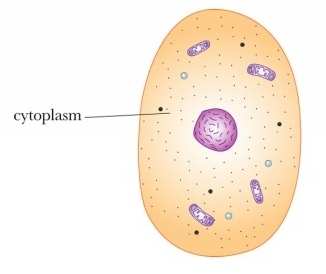
Cytoplasm is a gel-like substance (shown to the
right) found inside the membrane (outer surface) of a
is capable of existing by itself. The fluid part of
cytoplasm is known as cytochylema.
The more solid substance in the cytoplasms is
known as spongioplasm. For organisms known as
eukaryotes, cytoplasm contains all of the structures
(known as organelles) in the cell except for the
nucleus, which is the cell’s control center.
Cytoplasm inside a cell.
FEATURED BOOK: Molecular Biology of the Cell
Humans and other complex organisms such as other animals, plants, and fungi, are
examples of eukaryotes.
In eukaryotes the nucleus of the cell is separated from the cytoplasm and is located in a
separate liquid substance known as nucleoplasm.
Prokaryotes are organisms that have cells without a nucleus. Examples of prokaryotes
are bacteria. In prokaryotes, all of the contents of the cell are located within the
cytoplasm.
"Where Medical Information is Easy to Understand"™
Most of the activities in the cell happen within the cytoplasm. This
includes the process of cell division (a way that cells reproduce),
glycolysis, and metabolism. Glycolysis is the breakdown of glucose
(a type of sugar) by enzymes, which releases energy. An enzyme is
a type of protein that helps produce chemical reactions in the body.
Metabolism is the chemical actions in cells that release energy from
nutrients or use energy to create other substances. Cytoplasmic
means relating to cytoplasm. Cytoplasm comes from the Greek word
"kytos" meaning "a hollow cell," and the Greek word "plasma"
meaning "thing formed." Put the two words together and you have "a
hollow (cell) thing formed."