

MedFriendly®














Laminectomy
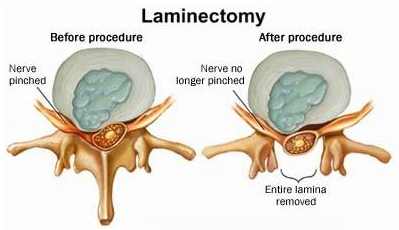
A laminectomy is a surgical procedure that is
done to remove part of the spine known as the
laminae. The laminae are two broad plates of
the curved bony structures that make up the
spine. Laminectomies often involve removing
curved bony structures on the back end of
these donut-shaped bones. The ultimate goal of
a laminectomy is to relieve the spinal cord from
being pressed on by the bone of the spine.
FEATURED BOOK: Healing Back Pain: The Mind-Body Connection
When bone presses on the spinal cord, it can cause intense pain. Bone may be pressing
on the spinal cord for a variety of reasons such as an injury (for example, a gunshot
wound) or deterioration of a disk. Speaking of disks, laminectomies are sometimes done
to remove an out of place disk located between the bones of the spine.
If several bony structures are removed, the patient may need to undergo surgery to fuse
(combine) the spine together. This is typically done by removing pieces of bone from
other parts of the body or by using artificial material, and then connecting it with the
bones of the spine. After the surgery is completed the patient is kept flat in bed so that
the bones of the spine line up properly. The patient is evaluated every 2 to 4 hours for 48
hours to evaluate motor and sensory functioning in the arms and legs. When a
laminectomy occurs in the neck area, the patient is observed for breathing problems
caused by swelling around the spinal cord.
"Where Medical Information is Easy to Understand"™
After a laminectomy, bandages should be examined for bleeding or
leaking of fluid from the spine. The patient is moved around without
bending or twisting the spine or hips. This is done by having the
patient fold his/her arms across the chest while extending the legs,
and being moved by nurses who pull on a sheet that is under the
patient.
Laminectomy comes from the Latin word, "lamina" meaning "plate,"
and the Greek word, "ektome" meaning "excision or remove." Put
the two words together and you have "remove (the) plate," referring
to bone. Laminectomy is also known as rachitomy and
spondylotomy.