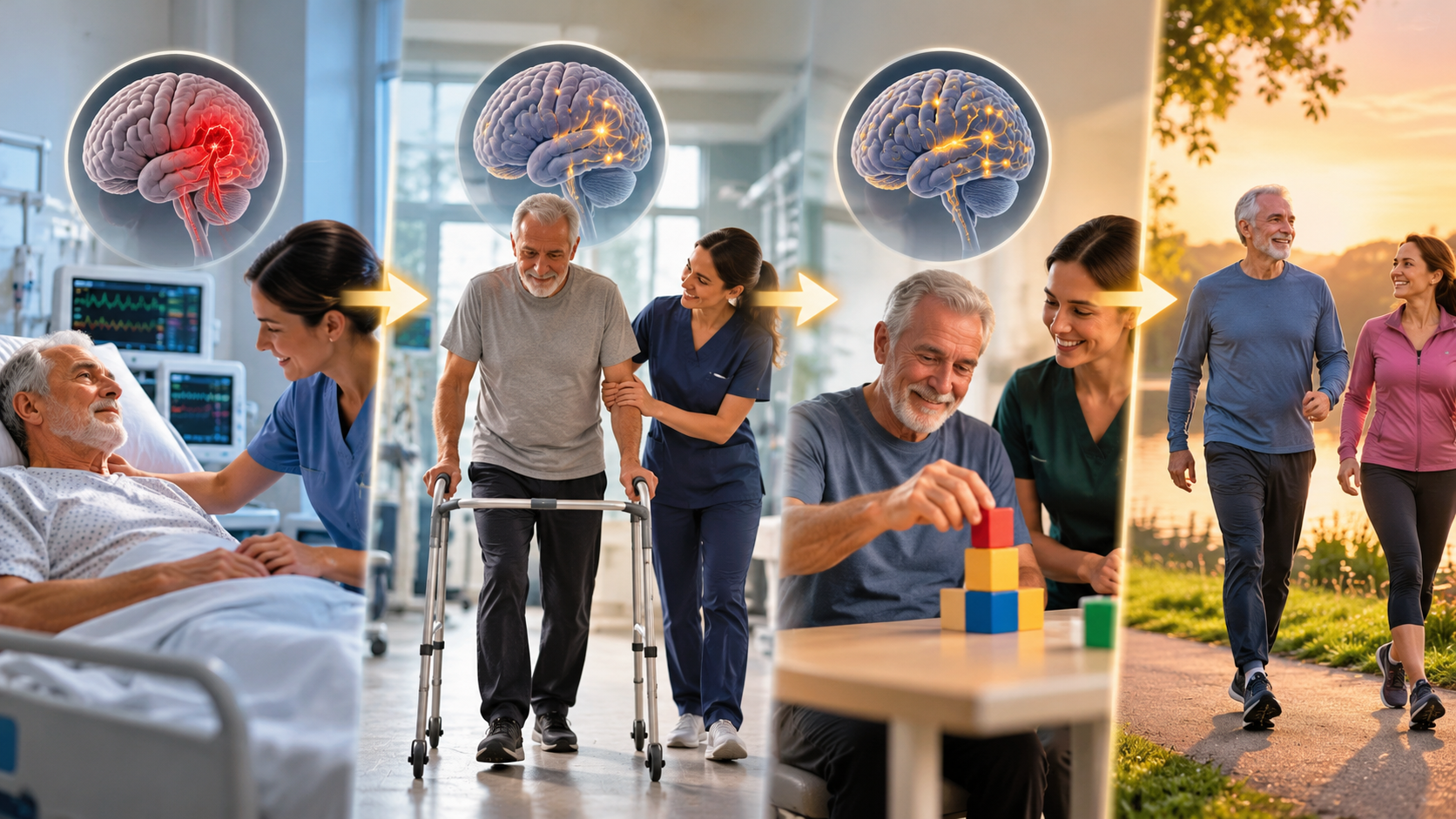















- Rehabilitation after a stroke helps patients regain movement, speech, and daily living skills through guided therapy and regular practice.
- Recovery often begins in the hospital and continues through outpatient care or home-based exercises.
- Physical, occupational, and speech therapies help improve strength, balance, communication, and independence.
- Recovery is often fastest during the first three to six months, but progress can continue for years with consistent care.
- Family support, healthy habits, and regular medical checkups help patients maintain progress and improve their quality of life.
How Does Stroke Rehabilitation Work?
Stroke rehabilitation helps people regain lost skills and find new ways to handle daily tasks. Therapists first check how well a person moves, speaks, thinks, and manages personal care. They then create a treatment plan based on the patient's needs and recovery goals.
The brain can form new connections, a process called neuroplasticity. These connections can help healthy areas of the brain take over some functions affected by a stroke.
Stroke recovery and rehabilitation use repeated movements and daily activities to help this process. Over time, regular practice can improve strength, control, and basic skills.
When Should Stroke Rehabilitation Begin?
Rehabilitation should begin once doctors confirm that the patient is stable enough for safe activity. For many people, this happens during their first hospital stay after a stroke. Early care helps therapists find movement problems and start exercises that match the patient's condition.
Recovery usually involves three main stages:
- Acute stage: The first few days focus on medical care, safe movement, and preventing health problems.
- Subacute stage: The following weeks and months focus on improving strength, balance, speech, and daily skills.
- Chronic stage: Long-term care helps people maintain progress and improve skills that remain difficult.
These stages do not follow the same timeline for everyone. Some people recover faster, while others continue making gains months or years after a stroke.
Types of Therapy After Stroke
A stroke rehabilitation program may include several types of care based on the patient's needs. Each type focuses on a different skill, such as walking, speaking, or managing daily tasks. The rehabilitation team tracks each patient's progress and adjusts treatment as needed.
Physical Therapy for Movement and Balance
Physical therapy helps people build strength, improve balance, and learn to walk more safely. Treatment may include standing practice, short walks, and exercises for weak arms or legs. Therapists also teach safe movement and when to use walking aids.
Working with an experienced physical therapist like Keith Chan can help patients receive exercise guidance tailored to their needs. A physical therapist checks movement, sets practical goals, and selects exercises for each stage of care. This personal approach helps patients practice safely while building strength and confidence.
Occupational Therapy for Daily Activities
Occupational therapy helps people manage common tasks, including dressing, bathing, eating, and preparing simple meals. An occupational therapist may suggest useful tools or easier ways to complete tasks.
Sessions also focus on hand control, grip strength, and other motor skills needed for daily life.
Speech and Cognitive Rehabilitation
A speech therapist helps people who have trouble speaking, understanding language, or sharing their thoughts. Speech-language therapy can also address swallowing difficulties and language problems associated with aphasia.
Other exercises focus on memory, attention, planning, and skills needed to make daily choices.
Rehabilitation Settings and Levels of Care
The best treatment setting depends on the patient's health, abilities, and support needs. Some people need inpatient rehabilitation, where medical staff and therapists provide daily care. Others can attend outpatient visits or receive treatment at home.
Common care settings include:
- Rehabilitation hospitals: Provide medical care, daily exercises, and several types of therapy.
- Skilled nursing facilities: Help people who still need nursing care and support with daily tasks.
- Outpatient clinics: Offer planned therapy visits while patients continue living at home.
- Home-based programs: Allow patients to practice movement and daily tasks in a familiar setting.
The care team reviews each person's needs before choosing the right setting. They also consider home safety, family support, and the level of help the patient needs.
Exercises and Technologies That Support Recovery
Exercise plays a major role in rebuilding movement and strength after a stroke. Rehabilitation in stroke patients often includes walking, balance practice, and simple tasks that improve hand control. Therapists choose exercises based on each person's strength, health, and ability to move safely.
Common exercises include:
- Sit-to-stand practice: Builds leg strength and makes it easier to get out of a chair.
- Supported walking: Builds balance and helps people walk longer distances.
- Reaching exercises: Improve arm control and make it easier to grab objects.
- Gentle stretching: Helps maintain joint flexibility and reduce muscle tightness.
- Daily task practice: Helps people relearn activities like eating, dressing, and preparing meals.
Some therapy centers use treadmills with body weight support to make walking practice safer. Other tools include robotic devices, mirror therapy, and virtual reality exercises. These methods may help some patients, but they work best as part of a broader care plan.
Factors That Influence Stroke Recovery
Recovery depends on several factors, including stroke severity, brain damage, and general health. The affected brain area can also change which skills are harder to regain. Age may affect progress, but it does not decide how much a person can improve.
Common problems include weakness, pain, fatigue, muscle stiffness, and trouble focusing. Some people also feel anxious or depressed, which can make therapy sessions harder to complete. Regular checkups help doctors address these concerns and adjust care when needed.
Emotional Support and Long-Term Independence
Rehabilitation for stroke survivors also focuses on mental health, family life, and social needs. Many people must adjust to changes in how they move, speak, or handle daily tasks. Family members can help by learning safe ways to offer support without taking away independence.
Joining a support group can help people share concerns and learn from others with similar experiences. Post-stroke care also includes regular checkups, prescribed medications, and management of risk factors such as high blood pressure. These steps can help prevent another stroke and support better long-term health.
How Long Does Recovery Take After a Stroke?
Many people make their fastest gains during the first three to six months after a stroke. Still, progress can continue for months or years with the right care and regular practice. Some patients return to daily tasks sooner, while others need help for much longer.
The recovery timeline depends on the stroke, overall health, and response to therapy. Therapists track changes in walking, speech, balance, and daily skills to measure progress. These results help patients set goals that match their current abilities.
Building a Sustainable Rehabilitation Routine
A steady routine helps patients keep practicing skills between therapy visits. Daily plans should include safe exercises, enough rest, and tasks that match the person's current abilities. Family members can support patients while giving them room to do things on their own.
A good routine also includes medical visits and exercise adjustments as skills improve. Patients should follow their therapist's advice, especially when balance problems or health concerns affect safe movement.
With regular care and support, rehabilitation can improve confidence, independence, and overall quality of life.