


MedFriendly®














Transference
Transference has several definitions in health care. It
can refer to the process of moving from one place to
another. This meaning of transference is also written as
transfer. Transference can also refer to when
symptoms shift from one part of the body to another.
This is often seen in conversion disorder, in which
emotional problems are changed into physical problems
that have no known physical cause. In psychology and
psychiatry, transference can refer to when unconscious
feelings, thoughts, and desires towards someone
important in the person's development (especially
someone from childhood) are redirected towards
someone else who represents a person from the
patient's past.
FEATURED BOOK: The Psychology of Transference
Unconscious feelings and desires are those that the person does not recognize he/she is
experiencing. An example of the above meaning of transference would be if a patient
redirected feelings of mistrust towards his/her parents to a psychologist during therapy. In
this sense, transference is a defense mechanism because it allows the patient to reduce
anxiety (nervousness) by reacting to others in a way that is familiar. Transference helps
to understand the emotional problems of the patient and how these problems began.
Transference can mean redirecting feelings about one idea to another idea. The above
meaning of transference is also written as transfer. Transference comes from the Latin
word "transferre" meaning "to carry over."
"Where Medical Information is Easy to Understand"™
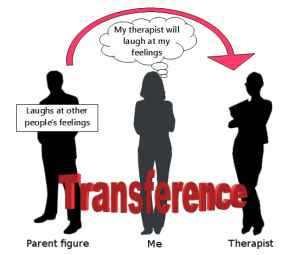
In transference, the patient
transfers feelings from her parent
towards her patient to the
therapist.